
17 November, 2012
August Cruise Analysis
I spent some time going over our tracks from our August trip, so I could see our average speed. We did all our projections based on 5 knots, and we always seemed to arrive early. The spreadsheet shows our average speed is actually lower. Also, our slowest leg was from Garrison Bay to Port Angeles. At the time it seemed like we made really good time on that leg. I'm a little surprised by this data.

25 October, 2012
Replacing Bulbs with LEDs
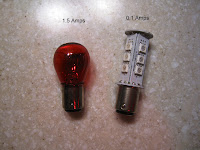
We have been replacing our old light bulbs with LEDs. Not only do they use less energy, but they are brighter, especially the red ones (for night time). Our overhead light fixtures take the bayonet style base, so we found these LEDs that fit the existing fixtures. The LEDs use 0.1 Amp. The Halogen uses 1.5 Amp. The picture really doesn't capture how much brighter the red light is.

 |
| Before |
 |
| After |
13 October, 2012
Lighthouse 1501 Series Motor Maintenance
Motor Maintenance
You will need:
Set of hex allen wrenches, 1/8, 1/4, 3/16"
7/16" 3/8" drive socket tool
Flat blade fine tip screw driver and flat standard screw driver
Razor blade
A medium heat source (heat gun)
Tube of GE clear silicone
Two 6203 RS sealed bearings
Scotch Brite pad for cleaning
Mild solvent or ISO alcohol for cleaning
Rubber mallet
One 2" PVC pipe coupling or piece of 2-2 1/2" non-magnetic tubing 3 - 4" in length
Four straightened paper clips or .06 diameter straight stiff wire 2" long
Permatex
Small bearing puller
3/4" small plastic pipe
Split the project into two days to allow time for silicone to cure.
Shut off power to windlass. Remove the two 3/16" socket head cap screws on the top of the black adapter housing. Using a heat source, raise the temperature of the adapter housing until the silicone bond is broken and the adapter housing can be removed. Clean the old silicone from all surfaces, adapter housing, as well as top of motor - this takes some time and is messy.
Motor is now free to slide off of the stainless steel downtube. The drive shaft components should all be lubricated when reassembled with an anti seizing lubricant. We used Permatex. Remove the large power conductors from posts at bottom of motor.
At the other end of the motor is the urethane motor terminal cover. Mark with a pen the location of the lower motor plate to the outer motor housing for reasembly purposes. It is wise to note the circular orientation of the motor boot to the motor so that the large electrical conductors realign themselves when you reinstall the motor. Remove the large clamp that goes around the cover and slide the motor terminal cover off. Clean any silicone sealant from the motor terminal cover.
There are two 7/16" head bolts which go through the length of the motor and clamp the motor together by screwing into the threaded motor end cap, remove these (turning counter clockwise) screws and withdraw them from the motor.
The motor end caps are now ready to separate from the middle field case. By striking the motor shaft with a soft mallet and holding onto the center motor case the brush holder end plate will be disloged and the upper motor end plate can be removed from the top of the motor.
With the top removed you can view the armature, at this point the brush holder end cap is still secured to the other end and held in place by the spring pressure of the brushes to the commutator. Do not remove the brush holder mechanism yet.
Place the PVC pipe coupler against the exposed armature and over the shaft end of the motor and place your other hand on the brush plate end, so as to hold the parts in column. The case will be held to the armature by the magetic field. While holding the parts together in column, turn them vertically with the non-magnetic tubing placed on a flat substantial surface. Using both hands grab the field case and slide down over the non-magnetic tube. The armature can now be separated from the magnetic field with the brush holder still attached.
You will see four holes visible externally from the end of the brush holder end cap. Remove the the silicone which is now filling these holes as they are the means of maintaining tension on the brush springs during reassembly. Take note of the brush spring and it's orientation.
Using the four straightened paper clips or wire, insert them into the holes. Retract the brushes all the way back in their brush retainers and push the wire through to engage the holes in the brush holder, thereby retaining the brushes under tension. The end cap can now be removed. Note: if the bearing stays mated to the armature, it can be removed using a small puller. We had to grind the puller down in order for it to fit. Make certain you do not loose the wave spring under the bearing.
Clean the armature using a mild solvent. It is preferred to use new 6203 ZZ style bearings when reassembling the motor to insure trouble free operation. We couldn't find the parts easily online and discussed needing parts for the maintenance with Hal (also a 1501 owner) at Mariner Supply (Go2Marine) and they created a kit for the Lighthouse windlass maintenance. You can order the parts here: http://www.go2marine.com/search.do?q=lighthouse. The shaft that the bearing fits to is .6693" so a piece of 3/4" plastic pipe can be used to relocate the bearings on the armature.
With the four straigtened wires holding the retracted brushes against the springs, blow or remove any dust from the brush holder mechanism. If corrosion is experienced in the brush holder mechanism (we did not have that), remove the wires and remove brush springs and emerse in white vinegar until gone. Then, rinse, dry and reassemble brush holder plate. Install brush holder mechanism on armature, making certain that wave spring is placed in bearing receptacle before bearing is inserted. Once brushes plate mechanism is installed on armature you can remove the wires. However, you can wait until final assemly to remove clips. Apply a small amount of electrical grease to the sides of the brushes.
Apply a bead of silicone to the mating surface of the brush holder/case junction. Seal the holes in the brush holder end, which you used for the paper clips/wire, with silicone.
Clean the magnet case of dust and inspect magnets for any cracking or looseness.
The reassembly is just the previous procedure reversed taking care to use silicone between mating surfaces, such as between the adapter housing and top of motor. Make sure and leave plenty of time for the silcone to dry before installing or it's a real mess.
Now align the timing marks and secure the two long motor connecting screws by only a thread or two. With the motor brush plate still not tight, apply a bead of silicone sealant around the motor shell to end plate joint - this can get messy depending on how much access you have to the motor. Now proceed by tightening the two screws, frequently turning the armature to make certain no binding can occur.
Install the urethane boot to its marked orientation using silicone sealant and tighten the sealing clamp - messy!
The motor is reinstalled.
We still have to complete the rest of the maintenance, but will wait for drier weather.
 |
| Some of the items you will need for the project |
 |
Motor Installed |
 |
| Remove the cables from the base |
 |
| Remove clamp |


 |
| Wires in the holes |
18 August, 2012
Martin Slough, WA to Portland, OR
Sunday 8/18/2012 - Martin Slough, WA to Portland, OR
We left early on Sunday morning trying to avoid yet another low tide. We arrived at our dock in the marina around 1300. It was the end of our adventure but just the beginning of our dream.
There were boat crashes, shouting and swearing, and rough weather, but we also found - new friends and appreciation for the ones we have; renewed faith in Bliss, the engine and auto pilot; respect for the ocean and nature; inner strength and confidence; and a greater connection between the two of us. We can't wait for the next adventure!


17 August, 2012
Martin Slough, WA
Saturday 8/17/2012 - Martin Slough, WA
We thought about heading back to the marina on Saturday, but the weather was lovely and we didn't want to end our vacation. We decided to stay another night. We all rode our dinghies to Sand Island and had a nice hike on the island. Later that day we all had happy hour on Bliss.
16 August, 2012
Martin Slough, WA
Friday 8/16/2012 - Martin Slough, WA

15 August, 2012
Astoria, OR to Martin Slough, WA
Thursday 8/15/2012 - Astoria, OR to Martin Slough, WA
We hustled in the morning, pre-dawn, to get Bliss out of the marina before the water levels would trap us in there until later in the day. The sunrise was beautiful. We noticed activity on the tankers that were anchored on the river at Astoria as we passed by. All of them cruised by us going up river later in the day. It was a long motor up the Columbia. The weather was beautiful. It was ideal for airing out the boat and cleaning. The worst part of the day was the constant barrage of biting horse flies. We have to thank Bill and Yvonne for the fly swatters, (along with all of their advice) they came in handy more than once on the trip. We decided to stay at Martin Slough before going home and stopped at Rainier on the way there to inflate the dinghy and pick up a few things at the store. We arrived in Martin Slough in the late afternoon. There was only one other boat there when we set the anchor and they left shortly after we arrived. As the sun set we had the slough to ourselves - it was so peaceful. What a nice way to wind down from our trip. The skies were clear and the air warm - perfect for stargazing.


14 August, 2012
Neah Bay, WA to Astoria, OR
Wednesday 8/14/2012 - Neah Bay, WA to Astoria, OR
The next morning, we found that we had made good progress, and we were on schedule to make the Columbia River Bar at slack or before. There was another slack right before sunset, but we wanted to make the slack around 1300 if we could. The seas about ten miles outside the bar were quite bouncy, but the closer we got to the bar, the seas became more settled. When we crossed the bar a little before slack, the conditions were mild and the sun started to shine. We saw four Coast Guard rescue ships at the North jetty and wondered why there were so many with such benign conditions. Once closer inside the bar, we knew why. There were, what it seemed like, hundreds of fishing boats. It was the first day of Fall Chinook Salmon fishing season! We were tempted to stop and fish, but decided to press on and tie up to the transient dock at Astoria. Once tied up, we decided to postpone cleaning the boat and go have a cold beer. It was hot and we were pooped. We cleaned up a little and walked to a nearby bistro for a cold beer and something to eat. Afterwards, we returned to the boat and washed the boat and jacklines and rinsed the sails. We had a nice chat with a fisherman - the tuna run off the coast was apparently incredible. We checked the weather conditions for our trip up the Columbia the next day. The weather would be good, but the tide in the morning would be at a minus tide (again!), which would create a water level lower than our keel. We decided to leave before the low tide at 0500.


 |
| Entrance to Columbia River Bar |
Neah Bay, WA to Astoria, OR
Tuesday 8/14/2012 - Neah Bay, WA to Astoria, OR
The next morning, the winds were blowing hard from the south, which made our exit from Neah Bay a bit uncomfortable - especially with the swell and current in opposing directions. The forecast down the coast was going to change from south winds, to 10-15 knot winds from the west in the late morning to 20-25 knot north winds late in the evening. One concern was the swell, which was forecasted to increase from 5-8 feet from the W/NW. We had a bumpy ride out of Neah Bay, but once about ten nautical miles out, the wind switched from the west and the ride was much smoother. We put up the sails and sailed all day on a beam reach. It was sunny with good wind. Sweet!! It was the best sailing experience we had the entire trip. We had to thoroughly rinse all of our dock lines that day - they reaked of dead fish and bird poo from the overnight in Neah Bay. In the early evening the conditions started to change - increased wave swells and strong winds from the North. We dropped the main and reefed the jib. Lesson learned, we should have reefed the main and rolled up the jib. With a reefed jib, there was quite a bit of rolling motion. We stayed with the reefed jib until the winds became so shifty that the constant deflating and slam of inflating changed our minds. We fired up the engine at 0130 and furled in the jib. We motored for the rest of the night, and put up with the rolling motion from the northwest swell. Even with the winds there was a dense fog and mist. We kept a close eye on the radar - there was plenty of shipping and fishing traffic to keep us awake and on task. Neither of us had much rest when we were off watch - the conditions were too uncomfortable. The phosphorescence behind the boat is magical.


13 August, 2012
Port Angeles, WA to Neah Bay, WA
Monday 8/13/2012 - Port Angeles, WA to Neah Bay, WA
The weather called for 10 knots of headwind in the morning through the Strait of Juan de Fuca, picking up to 15 to 20 in the evening We decided to get an early start from Port Angeles and left before dawn. As we headed out of the harbor, we came into fog and light winds. By mid-morning the swell and the wind picked up - rain was added to the mix. Bliss was getting pounded and we took water over the bow several times. One of the hits to the bow loosened the anchor and we could see that it was no longer tight on the windlass. Fortunately, we had secured the anchor chain with some line before we left the dock. We snugged up the anchor with the cockpit controls and kept and eye on it the rest of the trip. The wind increased throughout the day. We managed to make it into Neah Bay by late afternoon, just as the winds hit 25 knots. There was no repose from the wind as we entered Neah Bay. We called ahead to make sure there was a slip available and there was. The dock was filled with trash and covered with seagull poo. The stink that we remembered from the first stay almost two years ago was alive and well. We paid for the slip and prepared for our journey off the coast. The weather forecast for our trip was not ideal, but it wasn't anything to be concerned about. We were so grateful for the long range Wi-Fi antenna, which allowed us to check weather and emails throughout our trip.

12 August, 2012
Garrison Bay, WA to Port Angeles, WA
Sunday 8/12/2012 - Garrison Bay, WA to Port Angeles, WA
We left Garrison Bay at dawn and during low tide. Leaving a shallow anchorage during low tide and at dawn was starting to feel like a trend. To get to Port Angeles we needed to cross through Haro Strait - Orca country! We both had our eyes peeled for whales, but didn't see any. Regardless, it was a beautiful day, and we had calm seas through Haro Strait and the eastern part of the Strait of Juan de Fuca. We called ahead to make a reservation at Port Angeles Boat Haven. They said they had plenty of room. We arrived in early afternoon so we had ample time to prepare the boat. We washed, dried and stowed the dinghy. We were ready for our transit through the Strait of Juan de Fuca next day.
11 August, 2012
Stuart Island, WA to Garrison Bay, WA
Saturday 8/11/2012 - Stuart Island, WA to Garrison Bay, WA
We left Stuart Island the next day headed for Roche Harbor to check in to U.S. customs. Roche Harbor is a busy place with lots of boats zipping all over the place. We found the customs dock behind the moored boats and crab pots. The check-in did not take long. We fueled up at a the fuel dock, which was in a tight location, especially difficult to maneuver in with the strong winds. After staying in such beautiful, quiet anchorages during our trip, we knew that we did not want to stay overnight in Roche Harbor. A couple that we met in Victoria recommended Garrison Bay, just south of Roche Harbor, we decided to check it out. To get inside the bay, you have to go through a narrow and shallow pass called Mosquito Pass. It's known as the one of the most troublesome areas in the San Juans for charter boats. We managed to get inside the bay and found a nice spot to anchor and spend the night. The deepest spot was 20 feet. It was a beautiful day and that evening the skies were clear - perfect for star gazing. Our new Sport-a-Seat chairs are perfect for that.


10 August, 2012
Ganges, BC to Stuart Island, WA
Friday 8/10/2012 - Ganges, BC to Stuart Island, WA
Friday morning we motor sailed from Ganges to Stuart Island in the San Juans. We found a sweet spot to anchor in Reid Harbor at Stuart Island. The weather was sunny and warm. There were now 150 hours on the engine since our last oil change. It was going to have to be changed before we headed home, so we changed the oil and filter there in the harbor. We concluded that using the manual pump to change the oil is a pain. We added another "to do" on our project list - #203: Install an oil change pump.

 |
| Oil change - boat yoga. |
09 August, 2012
Pender Harbour, BC to Ganges, BC
Thursday 8/9/2012 - Pender Harbour, BC to Ganges, BC
The next morning we left Pender Harbor early during a low tide (again) so we would have enough time to get to Ganges Harbor before dark. We were extremely cautious exiting the resort in shallow water. The winds were light crossing the Strait of Georgia so we had a mellow crossing this time. The military operating area called Whiskey Golf, which is a large square area in Georgia Strait, was active. We made sure we stayed clear of it.
We arrived at Dodd Narrows early. We sailed around nearby while we we waited for the slack tide. When it was time to go through we heard on the radio that a boat towing something was heading north through Dodd Narrows. We waited until a boat towing a rather large dinghy came through and then we proceeded south bound. Only after we were already transiting the narrows, did we realize the boat that we had seen pass through was not the one that was on the radio. There was no time to turn around. Directly in front of us was a tug towing logs. We moved over as far as we could in the narrow channel and passed each other very closely. Why didn't he radio back when we radioed in that we were headed south bound. Arrghhh.
08 August, 2012
Princess Louisa Inlet, BC to Pender Harbour, BC
Wednesday 8/8/2012 - Princess Louisa Inlet, BC to Pender Harbour, BC
Slack tide was early in the morning, so we started motoring at daybreak and crossed Malibu Rapids outbound with no problems. We found strong headwinds through Jervis inlet. A few hours into our trip it began raining. As soon as we were within range for weather radio, we found out there was a low pressure system in the San Juans that was causing the south winds to funnel inside Jervis inlet and right on our nose.
When we arrived at Pender Harbour, we found the place was full of boats seeking refuge from the strong winds in the Straits of Georgia. We called several marinas and everyone was full. We found an empty slip at the very nice (and shallow) Painted Boat Resort. The resort was recommended to us from a couple we met in Victoria. We arrived near low tide and found depths of seven feet. That's less than two feet under our keel! After we got settled and paid our slip fee, we walked to the market and bought some fresh halibut steaks and greens. We used a recipe for the fish that we had gotten from our friends Bill and Chris - it was delicious!
http://www.paintedboat.com/marina.44.html

When we arrived at Pender Harbour, we found the place was full of boats seeking refuge from the strong winds in the Straits of Georgia. We called several marinas and everyone was full. We found an empty slip at the very nice (and shallow) Painted Boat Resort. The resort was recommended to us from a couple we met in Victoria. We arrived near low tide and found depths of seven feet. That's less than two feet under our keel! After we got settled and paid our slip fee, we walked to the market and bought some fresh halibut steaks and greens. We used a recipe for the fish that we had gotten from our friends Bill and Chris - it was delicious!
http://www.paintedboat.com/marina.44.html

07 August, 2012
Princess Louisa Inlet, BC
Tuesday 8/7/2012 - Princess Louisa Inlet, BC
We woke up to bright sunshine. The area in front of Chatterbox Falls was still packed so we headed for the mooring balls and found an empty one and tied up. It was quite hot and sunny, so we thought it would be the perfect time to do a little laundry. We hung the clothes to dry on the life lines - there wasn't an empty spot on the lines when we were finished. To cool off we had a nice swim around the boat - the water was refreshing. Someone told us about a waterfall "pool" in the inlet, so after our swim we headed out in the dinghy to find it. When we got to the boulder they said we would see, we tied the dinghy up on a log and hiked up a small trail. There it was - a beautiful waterfall splashing into a pool of water. The water was cold but refreshing. We went for another dinghy ride and then headed back to the boat. The clothes were dry and after putting them away we were hot enough again to go for another swim. What a fun day! In the evening, we reviewed our itinerary and decided that we should probably start making our way back to Portland. We left a couple of days extra in the plan in case we had poor weather and couldn't travel. We were not able to connect to wifi, but we already had the time written down for exiting the rapids on Wednesday - around 6:30 a.m.


06 August, 2012
Pender Harbor to Princess Louisa Inlet
Monday 8/6/2012 - Pender Harbor to Princess Louisa Inlet
We set out early in the morning. Pender Harbor, especially at the entrance, is filled with crab pots. Geralyn stood on the bow with the radio to help me navigate through the mine field of pots. We made it through without any problems. The sunrise was beautiful!
We motored all day and made great time. We even slowed down to take in the amazing sights of Jervis Inlet. Majestic peaks covered in snow outlined the inlet. We arrived early at Malibu Rapids around noon and saw some other sailboats taking a peek at the rapids. We took a look ourselves and saw enough turbulence to make us wait a little longer until slack water. A few other boats arrived and they all decided to wait as well. While we were waiting we had a nice lunch and relaxed in the sunshine with the motor off. We waited for about an hour, and decided to start approaching the rapids for our crossing at 1336 (slack water). As we were approaching the rapids, another boat took a peek but did not go through. We decided to go. We were the first boat to enter the rapids and found more current than we expected. The current was against us, so we had to rev the engine to 3000 rpm to maintain about three knots through the rapids. Once inside, we heard someone on the radio asking us to report the conditions in the rapids for the other boats waiting to go through. Once we felt we were out of the strongest part of the current, we reported on channel 16 that the current was about four knots in the rapids.
We motored up the inlet in awe. It was breathtaking. There are several waterfalls inside the inlet and a large waterfall at the end called Chatterbox Falls. You can anchor right in front of the falls, but you need to keep an eye on the depth sounder. One sailboat anchored too close to the edge and had run aground. He had to wait for the tide to fill in. We found the area in front of the falls a bit crowded and busy, so we found a spot on the end of the dock near the falls and tied up. After we were settled we hopped in the dinghy and did some exploring around the inlet. We found a pretty area not far from the falls with mooring balls. We decided we would move there the next day if the area in front of the falls was too crowded. It started drizzling while out in the dinghy so we headed back to the boat to make dinner. It rained all night.


 |
| 5:25 a.m. Jervis Inlet |
 |
| Jervis Inlet |


 |
| Grounded - a bit too close to the beach. |
 |
| Looking back towards Malibu Rapids |
 |
| Chatterbox Falls |
05 August, 2012
Nanaimo to Pender Harbor
Sunday 8/5/2012 - Nanaimo to Pender Harbor
The weather forecast was correct. The winds were 20-25 knots which created horrible chop on the water. We thought we would give it a try with the hopes the winds would calm down later. Our biggest worry with these conditions was towing the dinghy.
We had originally plotted a course straight from Nanaimo to Pender Harbour. However, the conditions were not ideal and we decided to follow a tip from the cruising guide. It suggested that if the winds were strong from the North to stay close to land on the eastern coast, and then cross the Strait of Georgia from Schooner Cove to Pender. We hugged the coast and found it more comfortable, so we pressed on towards Schooner Cove. We arrived at Schooner Cove around noon, and with so much daylight, we decided to turn east towards Pender Harbor. If the winds died down in a little while, great, if not, then we could turn around and stay at Schooner cove and wait for better weather to cross the strait. Around 1pm, just like weather forecast said, the winds died down a bit and the chop was not as bad. We continued on to Pender Harbor and arrived there before sundown.
We could have anchored in Pender Harbor, but decided to tie up and get some water and groceries before the long motor up Jervis Inlet and Princess Louisa Inlet. In these inlets there are no marinas, anchorages or fuel. Using the cruising guide we found a marina, Madeira Park, but they had no boat slips available. However, the float plane slip was available that night and we could tie up to that. It turned out to be a perfect spot with a grocery store a short walk from the marina. We learned that not all water is potable in Pender Harbor. You have to ask the folks at the marina. This marina turned out to have potable water, so we filled up our water tanks.
After our trip to the grocery store and a delicious dinner, we started planning our trip to Princess Louisa Inlet. Princess Louisa Inlet is almost at the end of Jervis Inlet, and is accessed through Malibu Rapids, which can only be crossed near or during slack. Malibu Rapids doesn't have its own tide station, so we followed the guide book's suggestion and used Point Atkinson tide table, with an offset of 36 minutes for Malibu Rapids. Slack low water at Point Atkinson the next day was at 1300, so we should try to arrive before 1336. This meant we had to leave Pender Harbor at 0500.


Subscribe to:
Posts (Atom)